
Free, no-obligation estimates
Concrete Slab Contractors for Garage Floors and Foundations in Bridgeport
We pour garage floors, shed pads, addition slabs and the footings under foundations, each one on a compacted stone base and quoted in full before we start.
Monday to Friday, 8 am to 4:30 pm. We answer or call back the same working day.
- 4,000 psiAir-entrained mix for outdoor slabs
- 7 daysBefore a car goes on new concrete
- 28 daysFor concrete to reach full strength
What we pour
Concrete Slab Contractors in Bridgeport
Concrete slab contractors pour the flat slabs and the footings a building stands on, and that is our work: garage, shed and addition slabs and foundation footings for residential and commercial properties across the city.
Garage floors
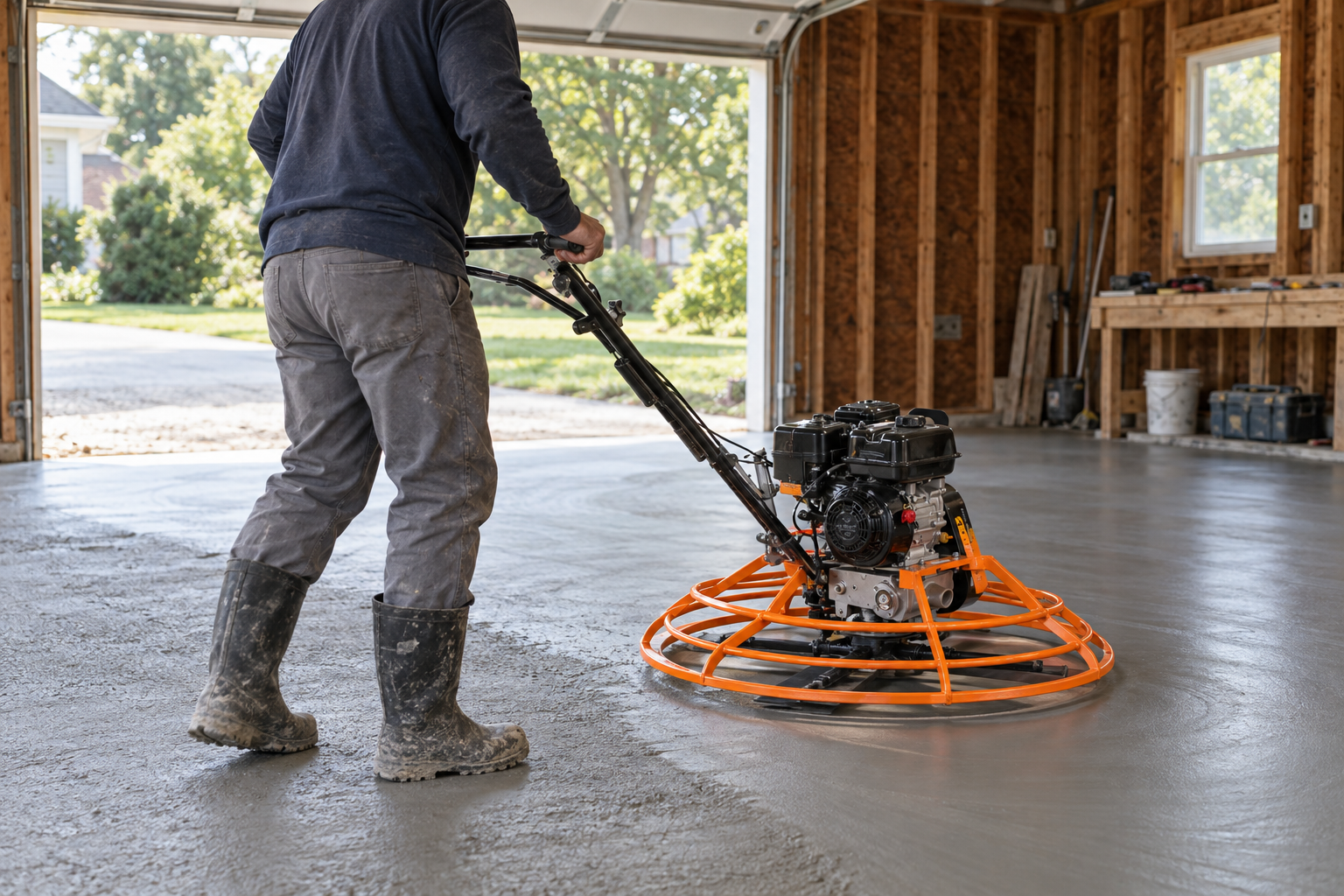
Poured to the right depth with rebar, sloped to drain and troweled smooth.
Shed pads
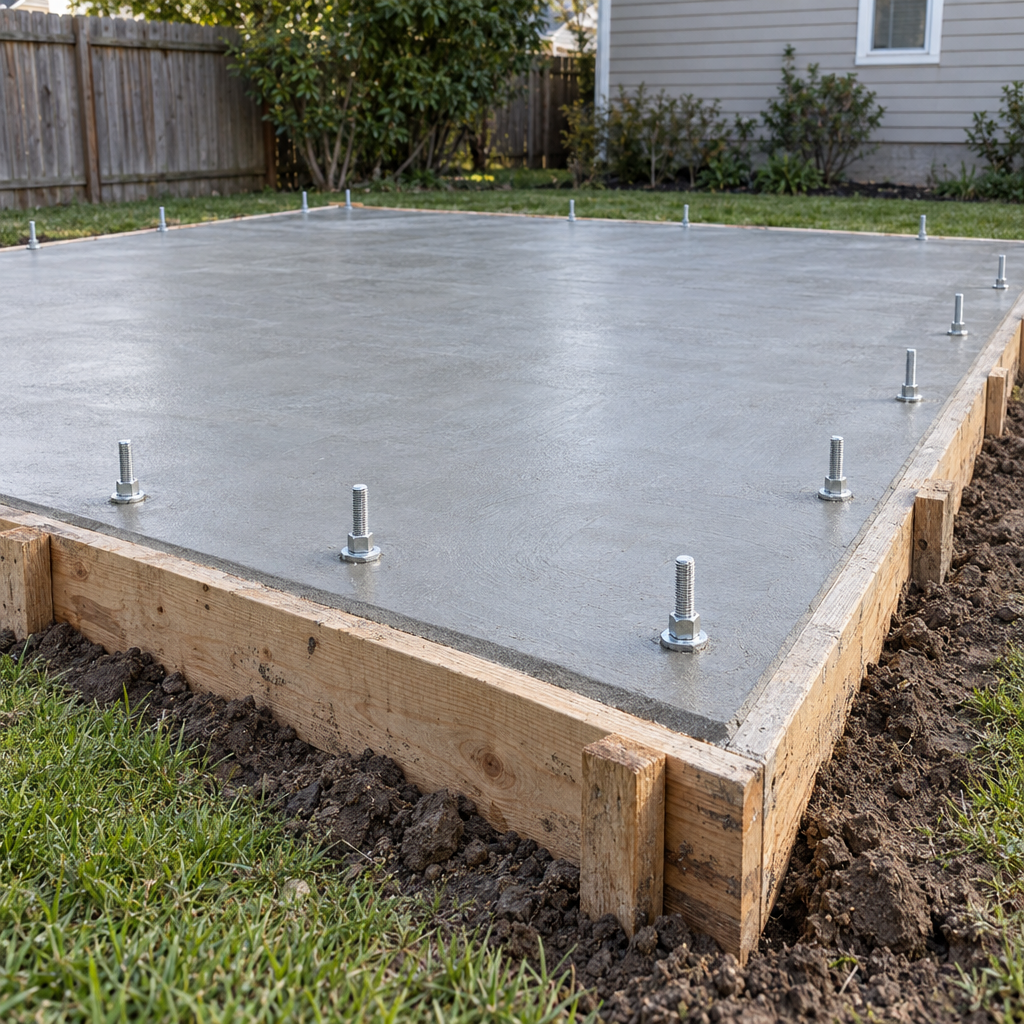
A flat, square pad inside straight forms, ready for the building that goes on it.
Addition slabs
A slab under heated living space, with a vapor retarder under the concrete.
Foundation footings
Formed to meet or exceed the building code before a wall goes up on them.
Free, no-obligation estimates on your property.
Under the concrete
The Base Under the Slab
A slab is only as good as the ground under it. All concrete cracks eventually, but a slab on a poor base cracks much sooner, so the base is built in order before any truck is called.
- Mark the lines
Before any digging, buried utility lines are marked through Call Before You Dig.
- Strip the topsoil
Topsoil is soft and holds water, so all of it comes out before any base goes in.
- Dig to depth
The ground is excavated to the depth the slab and its base need.
- Place the stone
The "base course", the gravel base, goes in at the depth the dig turns out to call for.
- Compact it in layers
A plate compactor only firms up a limited depth at a time, so the stone is compacted in several layers, never in one pass.
- Set the grade
Grade stakes set the slope, instead of copying the old slab by eye.
Mix, Thickness and Reinforcement
Outdoor slabs get a 4,000 psi "air-entrained concrete", the freeze-resistant mix, and the thickness and steel follow what the slab has to carry.
| Where it goes | Thickness | Inside it |
|---|---|---|
| Walks and paths | Four inches | Joints 8 to 10 feet apart |
| Where cars park or turn | Five to six inches | Rebar |
| Where heavy vehicles sit | Six inches | #4 rebar on chairs at 18 inches on center |
| Under heated living space | As the plans call for | A vapor retarder under the slab |
The mixing, placing, finishing and curing guides the trade works to come from the American Concrete Institute.
Pour day
How a Slab Is Poured and Finished
Pour day runs in a fixed order, and the concrete sets the pace: the joints are planned before it arrives, the bleed water decides when finishing starts, and the saw has its own window after that.
- Plan the joints
Joint spacing and timing are settled before the concrete is ordered, on a grid laid out to look intentional.
- Screed it flat
The wet concrete is struck off level across the tops of the forms.
- Bull float and edge
A bull float closes the surface and an edger rounds the borders along the forms.
- Wait out the bleed water
Water rises as the concrete settles. Final finishing waits until it leaves the surface, and a garage floor then gets its smooth trowel finish.
- Saw-cut the joints
"Control joints", the cut lines, are sawn 6 to 18 hours after the pour to about a quarter of the slab depth, so cracks form where planned.
- Cure it
Curing compound goes on after finishing, so the concrete holds its moisture while it cures.
No water added at the truck.It makes concrete easier to place, and it makes the slab weaker.
No finishing over bleed water.Working the surface while that water is still on it is a leading cause of "scaling", the flaking that shows up later.
After the pour
Cure Time
New concrete takes foot traffic in a day or two, cars after about a week, and reaches its full strength in about 28 days.
- A few daysPrep and pour
- 1–2 daysWalk on it
- About 7 daysDrive on it
- About 28 daysFull strength
Strong base prep, a quality mix and proper finishing are what make a garage floor last. The wait is the last part of it, so plan the car's parking spot for that first week.
Angel is very easy to work with and cares about his work along with fair prices.
Why call us
What You Get on a Slab Job
- A free estimateFree and no-obligation, measured on your property.
- A same-day answerWe answer the phone or call back the same working day.
- On timeWe show up when we say we will.
- The whole job quotedPriced in full before we start, with no surprise charges after.
- A clean siteWe clean up when the work is done.
Calls outside our hours go to voicemail and we return them the next working morning.
Under the walls
Concrete Foundations and Footings
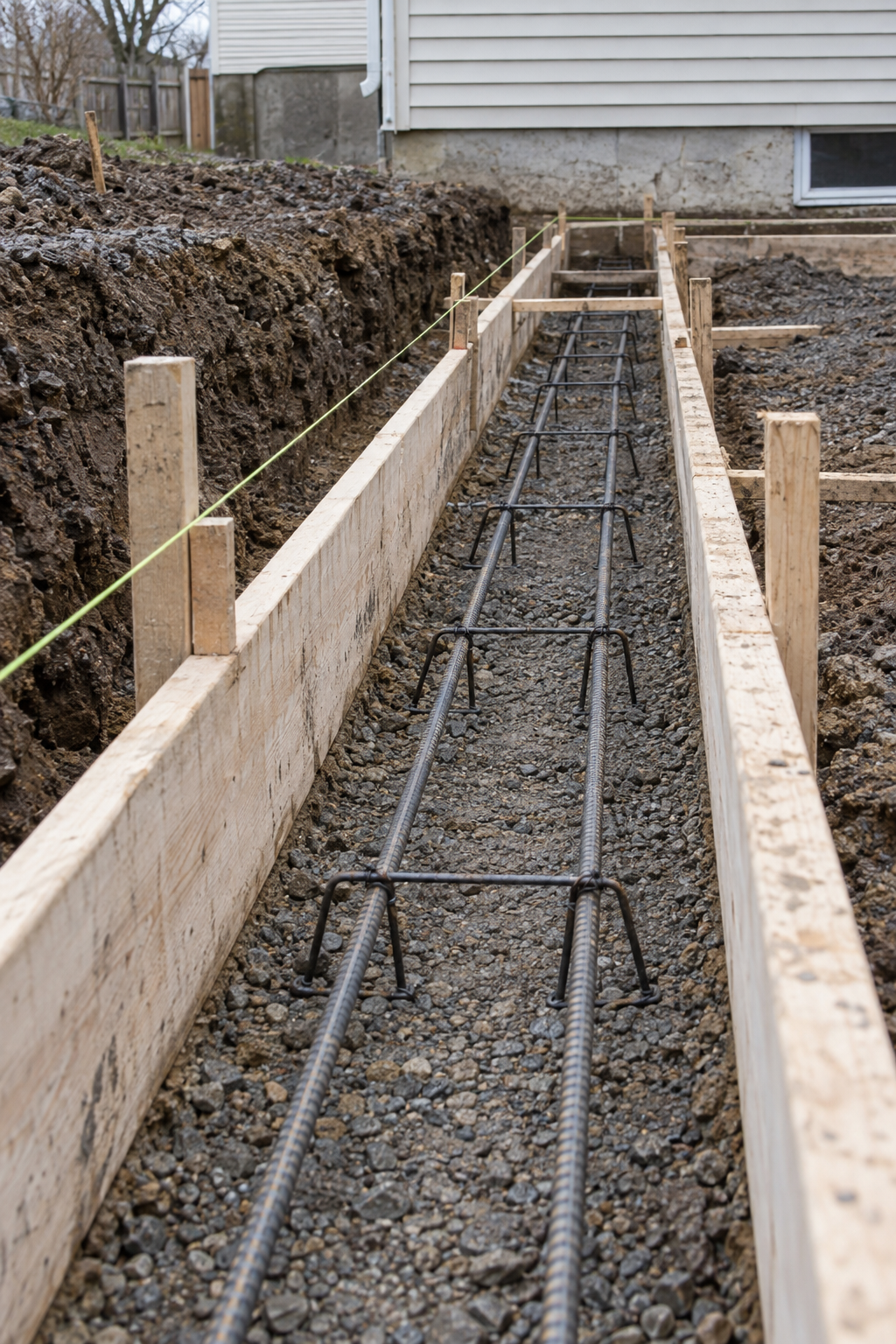
We form foundations and footings to meet or exceed the building code, and where a base inspection is required before the pour, the forms go in early so it can happen.
Here that code is the State Building Code, kept by the Connecticut Office of State Building Inspector. A footing is the one pour nobody sees again once the walls are up, so it is formed, inspected where the rules say so, and only then filled.
Across the trade, concrete technicians can hold American Concrete Institute (ACI) certification, which covers how concrete is tested and placed.
Before you ask for a number
How Concrete Slab Installation Is Priced
The price of a slab is set by its size, the access to it, the materials and the preparation the ground needs, and in Bridgeport a new slab typically runs $8 to $14 per square foot reinforced.
What moves the price
- Size and thicknessThe square footage, and how thick the slab has to be for what it carries.
- AccessHow close the ready-mix truck can get to the forms.
- Base preparationHow much digging, stone and compacting the ground needs first.
- Tear-outRemoving an old slab is priced by the volume of concrete coming out, not its surface area.
- Small poursA pad that needs less than a ready-mix truck's minimum load can carry a "short-load charge".
- Cold weatherA winter pour needs blankets, heated enclosures and mix changes, which add cost and risk.
The exact figure comes from the free estimate, and the written quote covers the whole job.
Around the slab
Related Concrete Work
Some jobs that come up around a new slab have a page of their own, linked here.
One call starts it
Tell Us About Your Slab
Tell us what the slab is for, a garage, a shed, an addition or a footing, and we set a time to come out, measure it and put the whole price in writing.
- We quote the whole job before we start, with no surprise charges after.
- Monday to Friday, 8 am to 4:30 pm.